A reflection curated by Massimo M. Møller
The beauty industry is closing a year defined by uneven growth and unusual volatility.
Luxury slowed. Selective distribution was challenged. Revenues that once grew effortlessly now require stronger strategy, fewer brand bets, and far more operational focus. What we’re seeing is not a collapse — but a rebalancing.
Amid these shifts, three major moves have reshaped the beauty landscape:
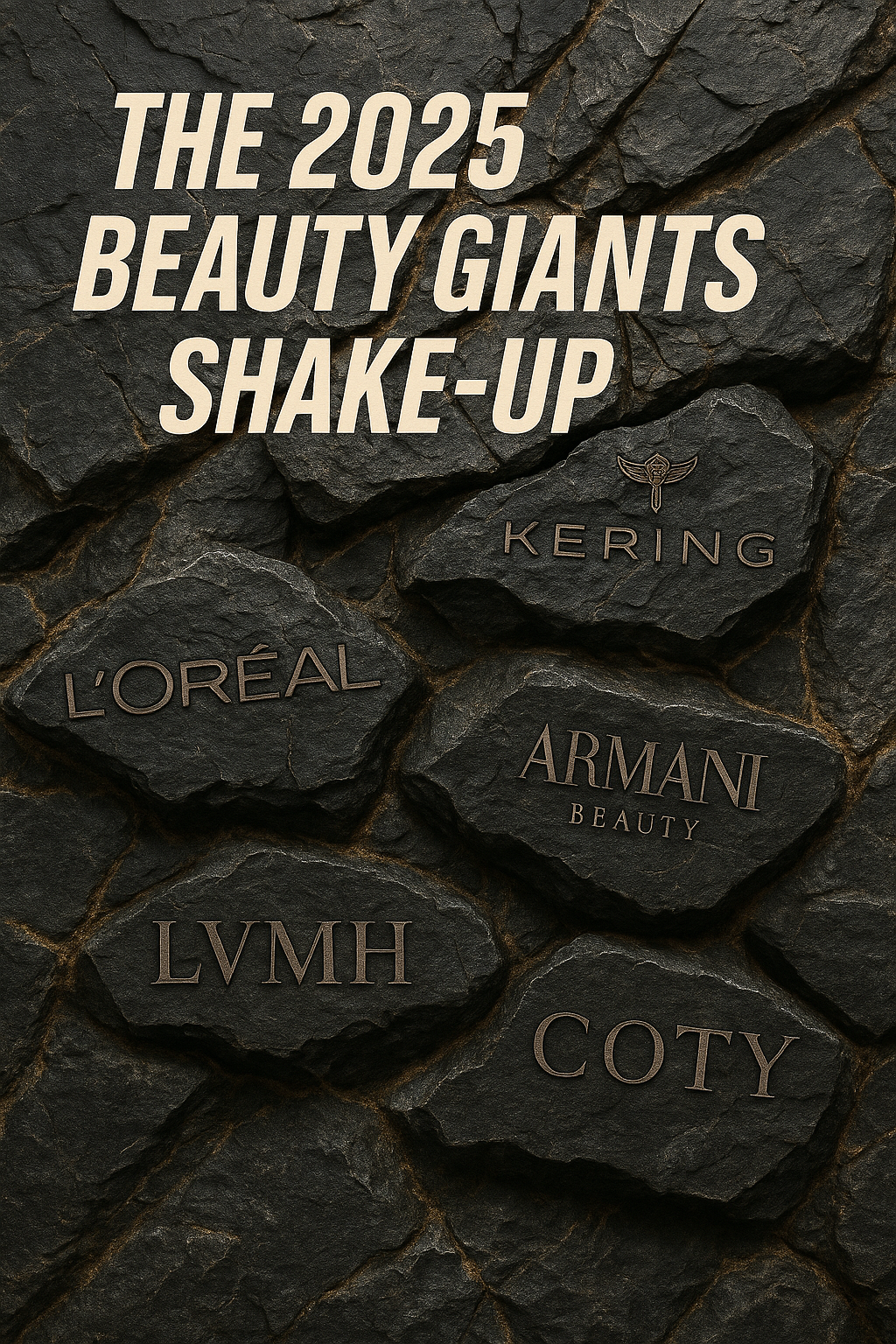
L’Oréal is acquiring strategically. Kering is exiting beauty. LVMH is reevaluating Fenty Beauty.
Together, these actions signal a deeper transformation across the sector:
• Conglomerates are tightening portfolios.
• Niche brands are becoming acquisition targets.
• Licensing is returning as the safer, smarter model for fashion houses.
• Equity investments must prove faster profitability.
• And behind the scenes, teams are restructuring, merging, or disappearing.
This is not just a new chapter — it’s a new map.

L’Oréal’s Acquisition Momentum: Scale Meets Niche
In 2025, L’Oréal demonstrated that the future lies in high-performance, science-backed niche brands rather than mass expansion.
The acquisition of Medik8, a clinical British skincare brand, reflects exactly that direction. Rather than fully absorbing, L’Oréal is keeping the founder and leadership involved — signalling a “grow with us” model rather than “grow inside us”.
What this represents for the market:
• Premium skincare remains the fastest-growing segment.
• Ingredient-led stories (retinoids, Vitamin C, peptides) continue to outperform.
• Niche premium brands deliver stronger margins and global scalability.
• L’Oréal is sharpening its portfolio rather than broadening it.
This positions the group as the industry’s most active consolidator — while its competitors are doing the opposite.
Kering’s Beauty Exit: A Luxury Fashion House Recenters
Kering’s decision to sell its entire beauty division to L’Oréal — including Creed and long-term beauty licenses for Gucci, Bottega Veneta and Balenciaga — marks one of the most significant portfolio reversals in recent years.
A deal valued at around €4 billion, this move ends Kering’s ambition to build an in-house beauty powerhouse.
Why this matters:
• Beauty is no longer viewed as an automatic growth engine for every luxury conglomerate.
• Running beauty at scale requires expertise, investment, and global retail power — strengths that L’Oréal owns, and Kering chooses not to prioritise.
• Licensing ensures revenue without operational burden.
But beneath this corporate surgery is a structural shift in how beauty resources are allocated, how functions are reorganised, and where future investment will go.
LVMH & Fenty Beauty: From Cultural Phenomenon to Strategic Re-Evaluation
Fenty Beauty launched in 2017 as an industry disruptor — redefining inclusivity and forcing competitors to expand their shade offerings.
But by late 2025, LVMH began exploring the sale of its 50% stake in the brand.
What this signals:
• Celebrity-led brands face maturity challenges once the initial cultural wave stabilises.
• Luxury groups are becoming selective in long-term investments.
• Profitability and scalability now outweigh cultural momentum.
This is part of a broader market correction — and a reminder that even iconic brands must align with stricter financial expectations.
Impact on the Beauty Ecosystem
These shifts ripple far beyond boardrooms, affecting the entire beauty architecture:
Talent & Jobs
Restructuring means roles merge, departments contract, budgets shift, and teams relocate.
Agility becomes a core skill.
Independent Brands Gain Visibility
As conglomerates reduce risk, niche houses become more attractive for partnerships and acquisitions.
Licensing Regains Strength
Fashion brands increasingly rely on expert beauty manufacturers instead of building internal infrastructures.
Tech & Services Rise
Diagnostics, AI-driven personalisation, and experiential retail become essential pillars of future investment.

THE NEW BEAUTY MAP
The beauty industry is not shrinking — it is reorganising.
Portfolio depth, innovation capability, and the ability to scale globally now matter more than portfolio size. Niche brands continue to create cultural momentum. Licensing emerges as a safe, efficient model. Celebrity beauty matures. And conglomerates are refining their investments based on more disciplined performance expectations.
But the most important part is what comes next:
Which categories will accelerate?
Which brands will lead the next acquisition wave?
Where will luxury groups reinvest their attention?
How will technology reshape the competitive edge?
And which emerging players will define the next era of beauty?
The map has changed — and the next moves will determine who leads it.
Missing something? Add your tips in the comments