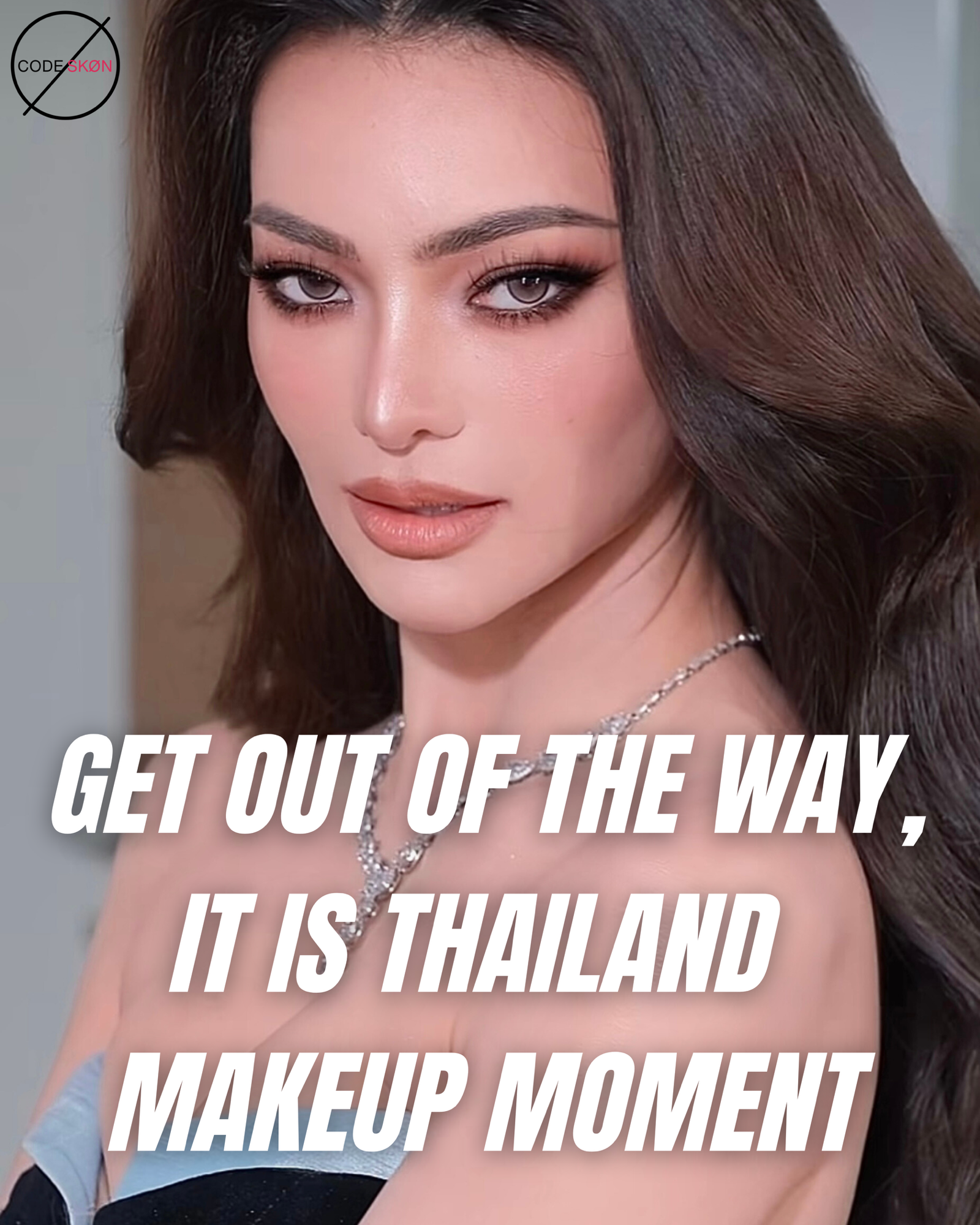
Something has shifted in the way I read “flawless” makeup every time I open my feed. It’s no longer just about full coverage and those sharp, Instagram‑era cut creases many clients used for references.

The looks that stop my scroll now are cleaner, softer and incredibly precise: smooth, light‑reflecting skin, lifted eyes, and lashes so delicately placed they almost don’t look real. And when I check where these saves come from, again and again, they lead back to Thai makeup artists and their Southeast Asian neighbours.

As a makeup artist, I find these glams almost hypnotic. Skin still looks like skin, just edited by hand instead of by filter: thin layers, nearly poreless, with light hitting only where it needs to.
Eyes are stretched and lifted with soft wings and micro‑thin liner, never with thick black blocks. Lashes are airy, separated and customised to each eye shape instead of one heavy strip.
The result is a full glam face that keeps taking over my algorithm – and I don’t mind it at all!
Southeast Asia is setting the pace

For years, most global beauty stories focused on Western brands or K‑beauty and J‑beauty. Meanwhile, Southeast Asia has been building its own beauty language, and it’s now impossible to ignore.
Thailand, Vietnam, Indonesia and the Philippines are full of artists who treat the face like a high‑definition canvas, but keep the result soft, clean and emotional rather than plastic.

What makes this wave special is that it keeps the magic of makeup alive. You see it in dreamy bridal looks, in Miss Universe–style stage glam, in those behind‑the‑scenes clips where a face is slowly built for a moment that really matters.
These are the kinds of references people still want to fantasise about, screenshot and bring into the chair.
What’s different now is how fast these looks travel. Trends don’t wait for runway seasons or campaigns anymore. They move through TikTok sounds, Instagram Reels and live sessions, and a whole technique – a certain way of lifting the outer corner, placing blush or layering highlighter – suddenly becomes “the look” everyone wants to copy.

Compared to K‑beauty’s pop‑idol sparkle or J‑ and C‑beauty’s very technical, clean transformations, this Southeast Asian wave feels softer and more cinematic: still precise, but rooted in fantasy and emotion. The message is simple: if you’re looking for where makeup is heading next, Southeast Asia is not the footnote. It’s the engine.

The artists you should have on your feed
If you want to understand this wave, the best place to start is with the artists themselves. Their feeds are like live portfolios and masterclasses at the same time.
• @babarabeer_makeup – A key name behind the ultra‑glossy, glass‑skin Thai look. His bases are thin but flawless, with glow that looks more like skincare than shimmer. Perfect if you want to study skin prep and how to keep radiance under control.

• @lyn_makeupp – Specialises in soft, lifted bridal glam. Think seamless shading, bright but gentle under‑eyes, and lashes that open the eye instead of weighing it down. Her page is basically a moodboard for bridal and event makeup.

• @ann.benjamas – Thai‑born and based in New York, she mixes Thai precision with an editorial and bridal sensibility that fits US clients. Skin is luminous, eyes are polished, and everything feels expensive but not overdone.

• @james_jarawut – Great if you’re obsessed with eyes. His work is all about structure: how to build a lid, how to stretch a wing, how to balance lower lashline and upper lid without closing the eye.

• @homeless_makeupb – Slightly more editorial and moody. You still get the same Thai attention to skin and lashes, but with more play in colours, shapes and intensity.

• @makeupbymansruang – Pure romantic Thai bridal: glowing complexions, soft contour, glossy lips and the kind of eyes that make emotional photos even stronger.

• @makeup_mario – Not directly part of the Thai scene, but interesting to keep as a reference point. For many artists, he defined “clean glam” in the West. Seeing his work next to these Thai pages shows how the centre of gravity has shifted: same level of technique, different softness, different face logic.

Why their content hits so good

These artists are not only good at makeup. They are very good at showing it.
Their content is built for the way we scroll now.
They post sharp before‑and‑after photos that show real skin first and the full transformation after.
They film close‑ups in motion, so you can see how the base sits, how the liner hugs the lash line, how the lashes move when the client blinks.

They share step‑by‑step reels and GRWM‑style videos where each product and each gesture is visible. Many of them also go live: doing bridal trials, teaching techniques, or answering questions while working on real clients.

What brings people back, again and again, is the transformation factor. Watching someone go from bare face, uneven tone and texture to the full Thai glam is still pure makeup magic.
It reminds viewers why they fell in love with this craft in the first place: not just for products and packaging, but for the power to change how a face feels and reads.
The new shape of the makeup artist job

These Thai and Southeast Asian makeup artists are also a preview of where the job is going for everyone else.
Being talented with brushes is now the starting point, not the full picture.
The modern MUA is also:
• A content creator, able to shoot, light and edit their own work.
• A teacher, breaking down techniques in simple, watchable formats.
• A host, speaking to camera on lives and stories.
• A personal brand, collaborating with clients, influencers and beauty brands in public, not just backstage.

For some artists, this new reality still feels intense or unrealistic. Not everyone wants to be visible all the time.
But looking at Thailand’s leading MUAs, it’s clear that the mix of strong technique + strong content is what turns a local artist into a global reference.

They are not just following trends; they are writing them, one reel, one transformation and one hyper‑detailed liner at a time.
If your feed is not yet full of Thai and Southeast Asian artistry, this is a good moment to change that – and maybe, to rethink what your own version of the “new” makeup artist could look like.
Who Needs to Pay Attention Now

For fellow makeup artists, this wave is not just “interesting” – it’s practical.
These Thai and Southeast Asian looks are already landing on client wishlists, inspo folders and bridal moodboards, and they will only get more common from here.
Learning how this skin, eye and lash work is built now means you’ll recognise the references when they sit in your chair later.

For beauty lovers, these feeds are the perfect Insta‑snack: short clips, dramatic before‑and‑afters, glassy bases and hyper‑detailed eyes that are strangely relaxing to watch on repeat.
Following a few of these artists is an easy way to refresh your algorithm and fall back in love with the “wow” effect of makeup again.

And for brands and the wider beauty industry, this is a talent pool to watch closely.
The same artists who are building huge communities and flawless looks on camera are also natural marketers, educators and creative thinkers.
They are already landing fast‑paced collaborations; given how polyvalent they are, some of them are very likely to become the next creative directors, product developers or brand founders shaping what beauty looks like in the next decade.

Missing something? Add your tips in the comments